ChatGPT and Human Design: How to Navigate and Understand Your Chart with AI
I feel like we’re living in a moment where self-discovery tools are everywhere. Personality tests, frameworks, algorithms, AI assistants promising insight at the click of a button.
And alongside that, there’s a very real question underneath it all:
Am I learning to understand myself, or am I outsourcing my intuition?
Human Design sits at a fascinating crossroads here. It’s a system built to help you understand your energy, your decision-making, and your natural rhythm, not to tell you who to be, but to remind you who you already are.
ChatGPT, on the other hand, is a powerful language-based tool. It can reflect, summarise, and explore patterns. But it can’t feel your body. It can’t sense your nervous system. And it certainly can’t replace lived experience.
That’s where this conversation gets interesting.
This article explores how ChatGPT and Human Design can work together in a grounded, ethical way. Not as a shortcut to answers, but as a reflective support. A way to explore your chart with curiosity rather than pressure, and insight rather than certainty.
If you’ve ever looked at your Human Design chart and thought “this is fascinating… but also overwhelming”, this is for you. (But buckle in, it’s a long one!)
Introduction to ChatGPT and Human Design
At first glance, ChatGPT and Human Design might seem like an odd pairing. One is an advanced AI trained on language and patterns. The other is a deeply personal system rooted in energy, embodiment, and self-awareness.
But they meet in one important place: reflection.
ChatGPT is particularly good at helping people explore ideas through language. It can help unpack complex concepts, rephrase dense explanations, and prompt deeper thinking through thoughtful questions. When used consciously, it becomes less of an answer machine and more of a thinking partner.
Human Design, meanwhile, is not something to be “figured out” all at once. Your chart isn’t a set of instructions. It’s a map. One that reveals patterns in how you use energy, make decisions, and move through the world over time.
When these two are used together, the role of AI matters enormously.
ChatGPT can support you in navigating your Human Design chart. It can help you slow down, notice themes, and reflect on what resonates. What it can’t do is tell you what’s right for you.
That distinction is crucial.
Used well, AI can help you ask better questions about your design. Used carelessly, it can pull you further away from your own inner authority. This article is written from the belief that self-discovery should build trust in yourself, not dependence on tools.
As we move through the rest of this guide, we’ll explore how to use ChatGPT as a supportive mirror while keeping your body, intuition, and lived experience at the centre of your Human Design journey.
What Is Human Design?
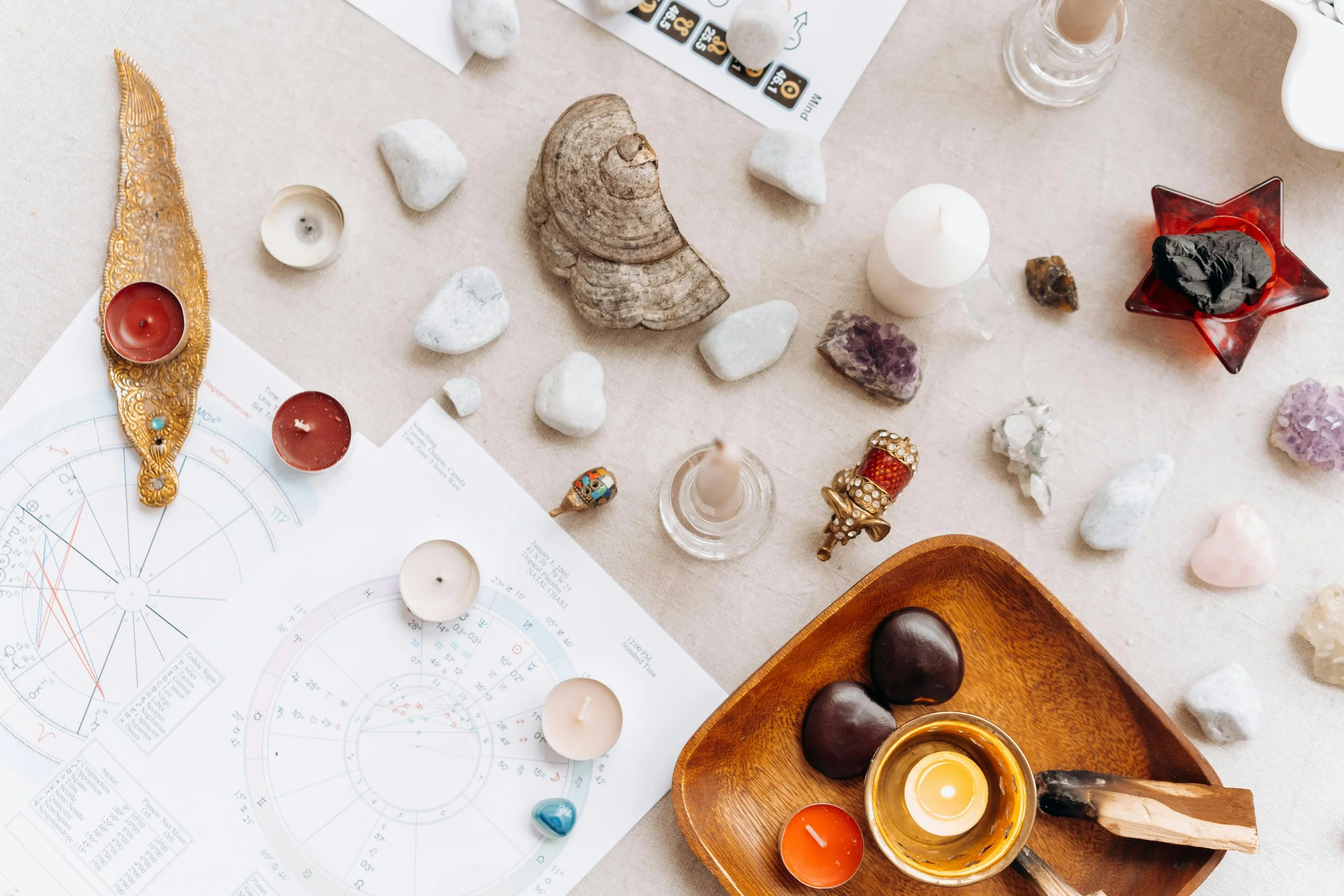
Human Design is a self-awareness system designed to help you understand how your energy naturally works. At its core, it’s about learning how you’re meant to make decisions, use your energy, and move through the world in a way that feels aligned rather than forced.
Unlike personality tests that categorise behaviour, Human Design focuses on energy patterns. It looks at how you’re wired to respond to life, not who you should try to become.
A Human Design chart is created using your birth date, time, and place. This information is used to generate a bodygraph, which brings together elements from several systems, including astrology, the I Ching, the chakra system, and modern science. You don’t need to understand the mechanics to work with it. What matters is how the insights land in your lived experience.
Human Design tends to resonate deeply with people who feel burned out by rigid systems and one-size-fits-all advice. If you’ve ever followed a strategy that looked right on paper but left you exhausted, disconnected, or doubting yourself, Human Design often provides language for that experience.
Rather than asking you to push harder or fix yourself, it offers permission to honour your natural rhythm.
At a high level, every chart includes a few key elements that shape how you experience life:
Type, which reflects how your energy interacts with the world
Authority, which shows how you’re designed to make decisions
Profile, which highlights themes in how you learn and relate
Centres, which indicate where your energy is consistent and where it’s more influenced by others
You don’t need to understand everything at once. Human Design is a system that unfolds over time, through observation, reflection, and self-trust.
How AI Like ChatGPT Can Enhance Your Understanding of Human Design
Human Design language can be dense. Charts are layered, terminology is unfamiliar, and many explanations assume a level of background knowledge that beginners simply don’t have.
This is where AI tools like ChatGPT can be genuinely helpful.
ChatGPT is particularly strong at working with language. It can summarise complex ideas, rephrase explanations in clearer terms, and help you explore patterns through reflection rather than information overload. When used intentionally, it can act as a translator between technical Human Design concepts and your everyday lived experience.
For example, instead of skimming generic chart interpretations, ChatGPT can help you slow down and explore what a particular theme might look like in your life. It can support journalling, prompt reflection, and help you notice patterns you may have overlooked.
This is especially useful if you’ve ever felt overwhelmed by your chart or unsure where to start. AI can help you break things down into manageable pieces rather than trying to understand everything at once.
However, this support comes with an important caveat.
ChatGPT doesn’t have a body. It doesn’t experience energy. It can’t feel your nervous system respond to a decision or recognise when something lands with relief versus resistance. That information lives in you.
AI works best when it supports curiosity, not certainty. It can help you explore your Human Design, but it shouldn’t be the place you hand over authority. Insight still needs to be checked against your own experience, intuition, and capacity.
Used with care, AI can become a reflective companion in your Human Design journey. Used without discernment, it can pull you away from the very self-trust the system is designed to build.
The key is intention: letting technology support understanding, not replace embodiment.
The Components of a Human Design Chart
Before using any tool, AI or otherwise, it helps to understand the basic building blocks of a Human Design chart. Not in a “memorise everything” way, but enough to feel oriented.
Human Design charts can look complex at first glance. There’s a lot going on visually, and it’s easy to feel like you need to understand all of it straight away. You don’t. In fact, trying to take everything in at once is one of the quickest ways to feel disconnected from the system.
Human Design is meant to be lived, not mastered.
Key Elements of Your Chart
At a foundational level, every Human Design chart includes a few core components that shape how you experience energy and decision-making.
Type
Your type describes how your energy is designed to interact with the world. It influences how you’re meant to initiate, respond, guide, or reflect, and plays a big role in how sustainable different ways of working feel to you.Authority
Authority shows how you’re designed to make decisions. It’s not about logic or external advice, but about where your internal truth comes from. This is one of the most important parts of your chart when it comes to building self-trust.Profile
Your profile highlights recurring themes in how you learn, relate, and move through life. It can explain why certain patterns repeat and why you’re drawn to particular roles or experiences.Defined and Open Centres
Centres show where your energy is consistent (defined) and where you’re more receptive or influenced by others (open). Neither is good or bad. They simply describe how energy flows through you.Gates and Channels
Gates and channels add nuance and detail, highlighting specific traits and themes. They’re powerful, but not where most people need to start.
You don’t need to hold all of this at once. Human Design works best when you focus on a few key elements and allow understanding to build gradually.
Understanding Type, Authority, and Profile
If there’s a place to begin, it’s with type, authority, and profile.
These three elements form the foundation of your chart. Together, they shape how you use energy, how you’re designed to make decisions, and how you experience recurring patterns in your life.
Your type gives context to your energy. Your authority shows you how to listen to yourself. Your profile offers insight into how you learn and grow over time.
When people try to explore every aspect of their chart at once, it often leads to confusion rather than clarity. There’s too much information, not enough integration, and no space for observation.
Human Design isn’t about doing more. It’s about noticing more.
Starting with the foundations allows you to build a relationship with your chart slowly, grounded in lived experience rather than mental understanding alone.
ChatGPT and Human Design: Using AI to Understand Your Chart More Deeply
This is where AI can become a supportive companion rather than a source of overwhelm.
When used intentionally, ChatGPT can help you explore your Human Design chart in a way that feels spacious and reflective. Instead of jumping between interpretations or trying to “get it right,” you can use AI to slow down and engage with your chart more thoughtfully.
ChatGPT is particularly useful for:
Clarifying themes
Helping you identify recurring ideas or patterns in your chart without fixating on details.Unpacking language
Translating technical or abstract Human Design terminology into more accessible, everyday language.Journalling prompts
Offering questions that encourage reflection rather than conclusions.
For example, instead of asking “What does my chart mean?”, you might explore how a specific part of your design shows up in your day-to-day life. This keeps the focus on self-observation rather than seeking answers outside yourself.
The real value of using ChatGPT with Human Design isn’t in receiving interpretations. It’s in creating space to notice what resonates, what doesn’t, and what feels true over time.
Your chart doesn’t reveal itself through instant understanding. It reveals itself through awareness.
AI can support that process by helping you reflect, articulate, and explore, but the insight always comes from you.
Using ChatGPT for Chart Interpretation
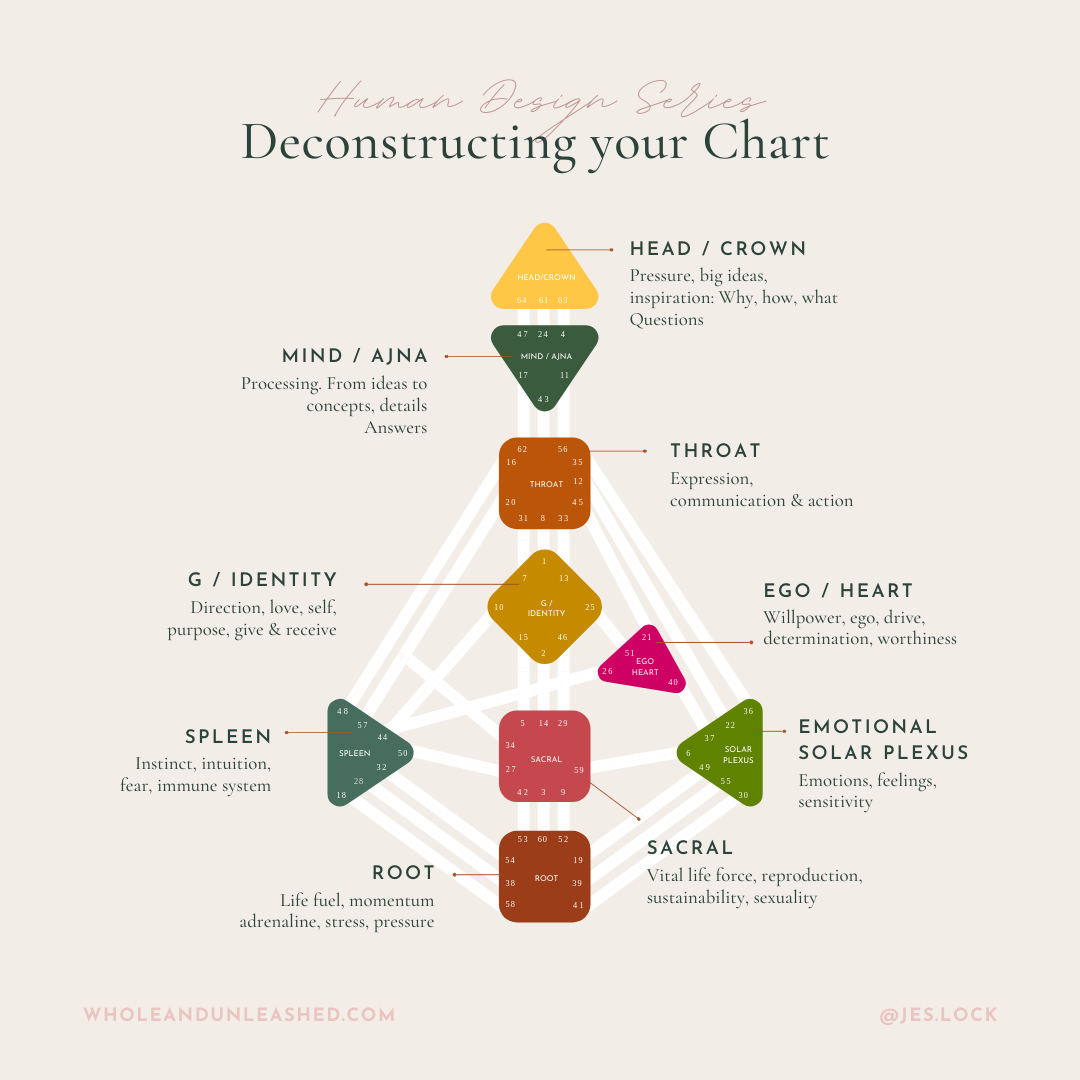
Image from Whole and Unleashed https://wholeandunleashed.com/human-design/the-9-centers-in-human-design/
Using ChatGPT with your Human Design chart works best when it’s approached as a reflective practice rather than a shortcut to answers. The value isn’t in interpretation alone, but in how the process helps you notice patterns, question assumptions, and deepen self-awareness.
AI becomes most supportive when it helps you engage with your chart rather than decode it for you.
Asking the Right Questions
When it comes to Human Design, how you ask matters just as much as what you ask.
Directive questions like “What should I do?” or “Tell me the right decision” tend to push authority outward. Exploratory questions, on the other hand, keep you connected to your own experience.
Supportive prompts might sound like:
“What themes might I observe around my authority in everyday decisions?”
“How could my type experience rest and momentum differently?”
“What patterns could I reflect on related to this part of my chart?”
These kinds of questions encourage curiosity rather than certainty. They invite reflection instead of instruction. Over time, this builds familiarity with your design in a way that feels embodied rather than theoretical.
Human Design isn’t something you solve. It’s something you observe.
Requesting Insights Without Giving Your Power Away
One of the biggest risks when combining AI and self-development is authority outsourcing. It can be tempting to treat AI responses as truth, especially when the language sounds confident or insightful.
This is where discernment matters.
ChatGPT’s responses work best when they’re treated as starting points, not conclusions. They can highlight possibilities, but they can’t tell you what’s right for you.
Any insight is only useful once it’s checked against:
your body’s response
your energy levels
your emotional state
your lived experience over time
If something resonates, sit with it. If it doesn’t, that matters too. Human Design is deeply personal, and your authority always comes from within.
Using ChatGPT With Your Human Design Type
One way to use ChatGPT intentionally is to tailor reflection to your Human Design type. This keeps the focus on observation and awareness rather than comparison or pressure.
Generators and Manifesting Generators
For Generators and Manifesting Generators, reflection works best when it centres on response.
Helpful areas to explore include:
noticing what feels energising versus draining
reflecting on where excitement naturally arises
exploring frustration as a signal rather than a flaw
Prompts that invite reflection around response can help you reconnect with what your energy is actually responding to, rather than what you think you should be doing.
Projectors
Projectors benefit from reflection around recognition, rest, and boundaries.
Supportive exploration might include:
noticing when guidance is invited versus forced
reflecting on how rest impacts clarity
unpacking patterns around overgiving or proving worth
ChatGPT can help validate experiences many Projectors have felt but struggled to name, without encouraging overwork or self-judgement.
Manifestors
For Manifestors, reflection often centres on urges, initiation, and boundaries.
Helpful themes include:
exploring what initiation feels like in the body
reflecting on resistance from others without internalising it
clarifying where informing creates more ease
AI can support clarity around these patterns without dulling the natural impact of Manifestor energy.
Reflectors
Reflectors benefit most from long-term pattern tracking and environmental reflection.
Supportive areas of exploration include:
noticing how different environments affect energy
reflecting on patterns over weeks or months
observing emotional and energetic shifts across time
ChatGPT can help organise reflections, but the wisdom emerges slowly, through lived awareness rather than immediate insight.
Integrating AI Insights Into Your Daily Life
Insight alone doesn’t create change. Integration does.
Using ChatGPT alongside journalling, rest, and gentle observation allows insights to settle into your nervous system rather than turning into action pressure. This is especially important if you’re already prone to overthinking or burnout.
Instead of asking “What should I do next?”, integration looks like:
noticing what repeats
observing what brings relief or tension
allowing patterns to emerge over time
Human Design unfolds through experience. AI can support that process, but it can’t rush it.
Information becomes meaningful when it’s embodied.
The Limits of AI When Navigating Your Human Design Chart
No matter how advanced it becomes, AI has limits that matter deeply in self-discovery work.
ChatGPT can’t feel your body.
It can’t sense your nervous system.
It can’t recognise emotional nuance or energetic shifts in real time.
Human Design lives in the body. It’s revealed through sensation, timing, and lived experience. These are things no algorithm can replicate.
That’s why discernment is essential. AI can reflect patterns, but only you can feel what’s true.
Human Design isn’t something you learn once and apply forever. It’s a practice of noticing, adjusting, and trusting yourself more deeply over time.
Why Personal Support Makes the Difference
There’s a big difference between consuming information and integrating it.
Personal support offers:
nuance
safety
context
and reflection grounded in your real life
Human Design coaching isn’t about giving answers. It’s about helping you build trust in your own authority, understand your patterns with compassion, and integrate insights in a way that feels sustainable.
Support helps move you from knowing to living your design, without pressure or overwhelm.
Conclusion: The Future of AI and Human Design
AI and Human Design can coexist beautifully when used with intention.
AI works best as a companion tool, supporting reflection and understanding. Human Design works best as a practice of self-trust, embodiment, and lived awareness.
As AI becomes more embedded in daily life, discernment becomes even more important. Tools should support your connection to yourself, not replace it.
The wisdom isn’t in the chart.
It isn’t in the tool. It’s in you.
Explore Your Human Design With Support

If you’d like support exploring your Human Design chart with depth, nuance, and embodiment, you can explore my Human Design coaching packages here.
This is an invitation to understand your design in a way that feels safe, spacious, and genuinely aligned with who you are.