7 Things to Do After Your Human Design Chart Reading
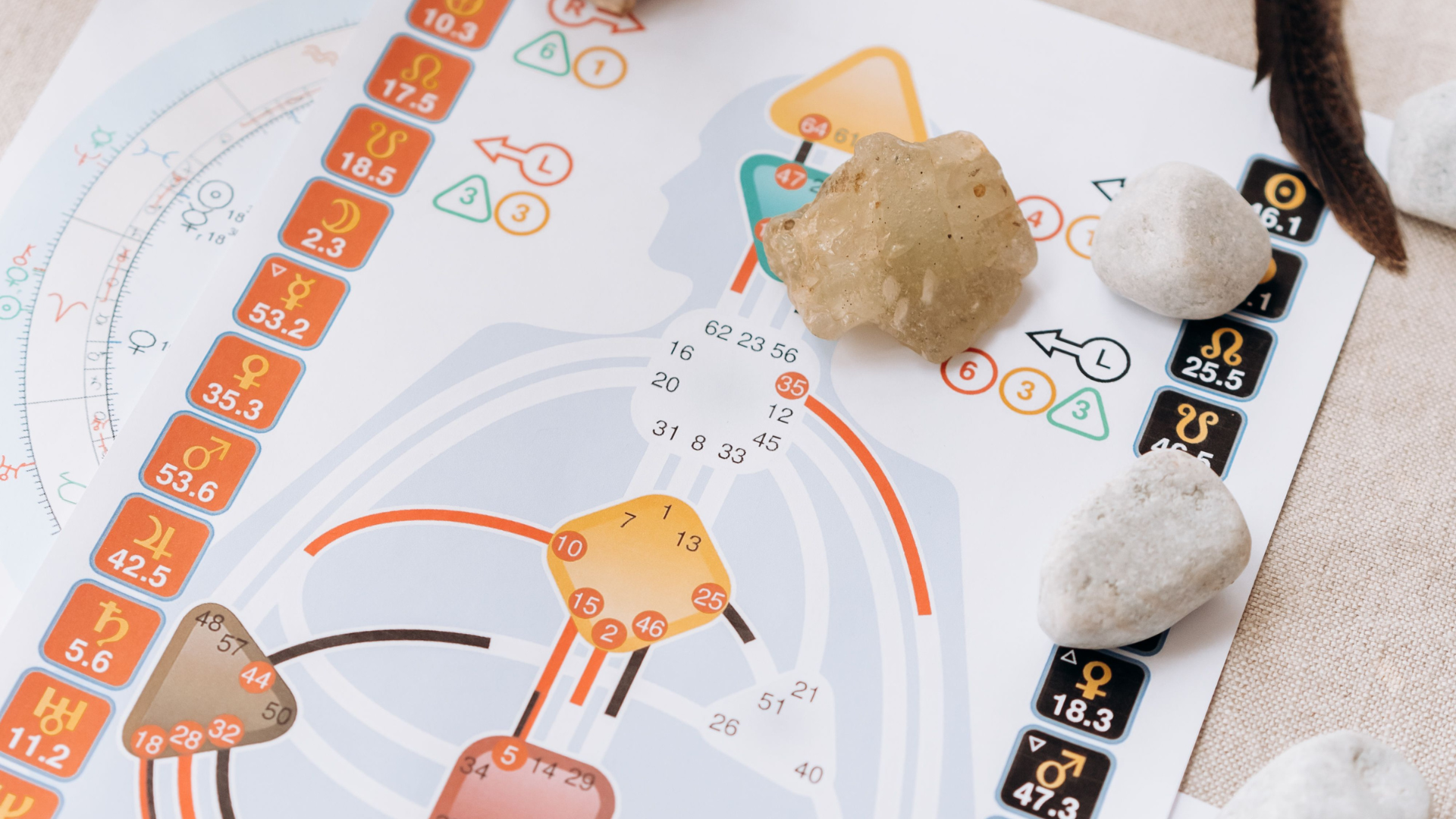
You've had your human design chart reading, or maybe pulled your chart from a free generator and worked through it yourself. Either way, you've maybe read it once, possibly twice, and you're sitting with that particular mix of "this is fascinating" and "I have no idea what to do with this." That gap between getting the information and actually using it is where most people lose momentum.
If you want the fuller picture of what your chart is actually showing you before diving into action steps, this companion piece covers the orientation side in more depth. This piece picks up from there with the practical part: here are seven concrete things to do with your chart now, in an order that actually makes sense rather than all at once.
1. Revisit your human design chart reading and read it twice
Not once. Twice. The first read, you're just taking in information. The second read, you're checking it against your actual life rather than your idea of your life.
There are five types: Generator, Manifesting Generator, Projector, Manifestor, and Reflector. Each one describes a fundamentally different way of using and managing energy. This is the foundation everything else sits on, so don't skip ahead until this part feels at least somewhat settled.
2. Learn your strategy, and try it on one small decision
Your strategy is the basic instruction for how your type is built to engage with life. Generators and Manifesting Generators are built to respond to what's in front of them rather than initiate from scratch. Projectors do best waiting for invitation and recognition before stepping in. Manifestors are built to inform others before they act, which smooths a lot of friction they wouldn't otherwise see coming.
Don't try to overhaul your entire life around your strategy this week. Pick one small, low stakes decision and run it through your strategy instead of your default pattern. See what happens. That's the experiment. Repeat it.
3. Identify your authority and notice how it actually shows up
Authority is where your most reliable truth lives in your body, and it's almost never where you've been taught to look for answers, which for most of us means our heads.
If you have emotional authority, your truth needs time and a full emotional wave before it settles. That might mean genuinely sitting with a decision overnight, or longer, rather than deciding in the moment. If you have sacral authority, it's the opposite: an immediate gut response, often before you've even finished hearing the question. Other authorities, splenic, ego, self-projected, and more, each have their own timing and signal.
For this step, don't try to use your authority on a big decision yet. Just start noticing how it shows up day to day, in small low-stakes moments, so you recognise the feeling before you need to trust it for something that matters. If your human design chart reading didn't go deep on authority, Jovian Archive's beginner hub has solid foundational breakdowns of each one.
4. Look at your defined centres before your open ones
It's tempting to go straight for your open centres because they often feel more revealing, more "ohh, that explains so much." But understanding your defined centres first gives you a baseline of what's actually consistently you, which makes the open centres much easier to make sense of afterwards.
Defined centres are the parts of your design that run a fixed, consistent theme, energy and traits you can rely on regardless of who's around you. Read through what your specific defined centres mean before moving on to the undefined ones.
5. Notice one open centre this week, nothing more
Open centres aren't broken or missing. They're where you're designed to take in and learn from the energy around you rather than generate something fixed yourself. The risk is absorbing other people's stuff there and mistaking it for your own.
Pick just one open centre from your chart. For the next week, simply notice when it's active, when you're picking up something from someone else in that area of life, without trying to fix, judge, or even fully understand it yet. Awareness first. Application later.
6. Write down what already felt true in your human design chart reading
Some parts of your chart will land instantly, well before you understand the technical explanation behind them. Don't wait until you've intellectually mastered the system to honour that recognition.
Keep a running note, in your phone, a journal, wherever, of the moments your chart describes you accurately. This becomes genuinely useful later, both as evidence for the days you doubt the whole thing, and as a record of where your real work of integration is actually happening.
7. Resist the urge to explain your whole chart to everyone you know
This one's less about your chart and more about you. New information that explains you to yourself is genuinely exciting, and the instinct to share it with everyone in your life is completely understandable.
But Human Design lands very differently depending on whether someone's curious or sceptical, and you'll integrate this far more solidly if you spend the first few weeks applying it quietly to your own life rather than defending it in conversations with people who didn't ask. Let your chart change how you operate before you try to change how anyone else thinks about it.
The pattern underneath all seven
Notice that none of these steps ask you to overhaul anything. They ask you to look, notice, try once, and observe. That's intentional. A human design chart reading isn't something you adopt overnight. It's one you live into, gradually, often over years, and the people who stick with it long enough to feel real change are almost always the ones who didn't try to swallow the whole chart in week one.
So take these seven, spread them over a few weeks rather than a weekend, and let your chart earn your trust slowly rather than asking you to take it entirely on faith from day one. And if you haven't had your human design chart reading yet, you can generate yours free with our human design chart calculator.